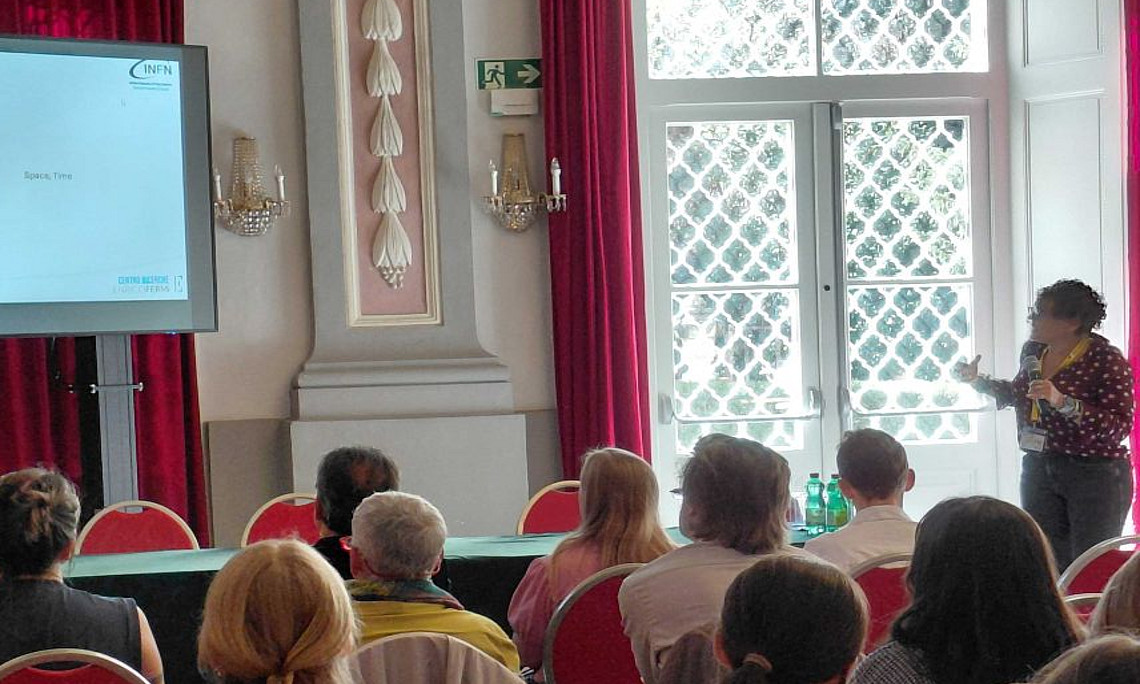



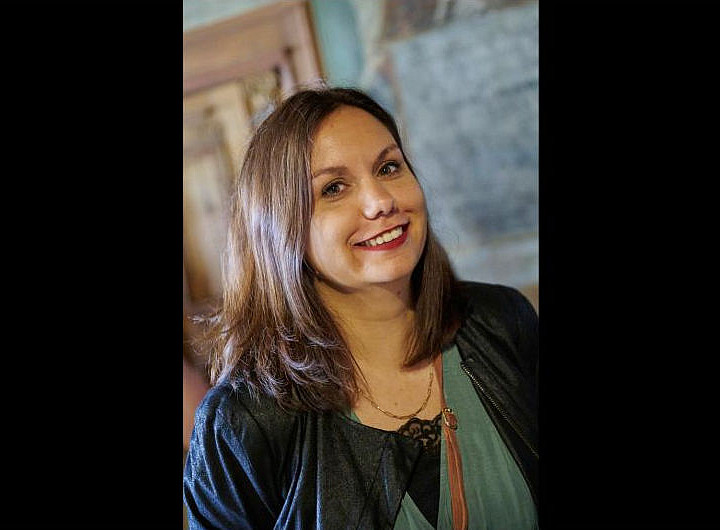
We are delighted to announce that our former colleague, Dr. Katrin Nahidi (University of Kassel), has been honored with the prestigious Hammer-Purgstall Prize 2026 by the University of Graz. The award ceremony will take place on Monday, November 23, 2026, at 5:00 p.m. at Meerscheinschlössl in Graz. As part of the event, Dr. Nahidi will not only be recognized for her groundbreaking research but will also present a lecture offering insights into her current work.
Lecture by Dr. Katrin Nahidi:
“Naft, Neft, Oil. Multilingualism and Images of Petromodernity on the Caspian Sea”
In her lecture, Dr. Nahidi explores how deeply our history, present, and subjectivities are shaped by resources such as oil—a topic of particular relevance in light of the ongoing societal shift toward a post-fossil era. She asks: Where does the oil we consume come from? Using the example of oil from the Caspian Sea, which travels through various countries and languages before reaching Austria, she demonstrates how the terms naft (Persian), neft (Azerbaijani), and neft’ (Russian) trace the imperial routes of this resource.
Historically, Dr. Nahidi draws a connection to Joseph von Hammer-Purgstall, who opened up Persia and the Ottoman Empire to philological study at a time when Persia lost its territories on the western shore of the Caspian Sea to Russia—precisely where industrial oil extraction began shortly thereafter. She highlights how translation is always both connection and appropriation, and how, around 1900, Baku became a hub where people of many languages, international companies, and empires converged. From a critical perspective on representation, she asks: Who appears in the photographs of the early oil industry—and who does not? In which languages were these images labeled and archived?
At the Caspian Sea, the question of the legibility of archives is particularly complex: Azerbaijani was divided between two empires and changed scripts several times in the 20th century, resulting in an archive layered with different levels of readability. Dr. Nahidi refers to the satirical magazine Molla Nasreddin, which advocated for Latinization as a step toward modernity, and to the artist collective Slavs and Tatars, which makes such alphabet politics visible through installations and lecture-performances.
In conclusion, Dr. Nahidi demonstrates that petromodernity began in Baku, showing that modernity is not solely a Western product but also a colonial modernity shaped by both Soviet and British imperial rule in the Caspian region and Iran. The visibility and legibility of oil are thus closely linked—and multilingualism is a prerequisite for understanding the region’s history. Contemporary artists such as Almagul Menlibayeva illustrate that the consequences of this history reach the shores of a shrinking sea to this day.
We warmly congratulate Dr. Katrin Nahidi on this well-deserved recognition and are proud to have accompanied her on part of her academic journey.