Begin of page section:
Page sections:

  • Go to contents (Accesskey 1)
  • Go to position marker (Accesskey 2)
  • Go to main navigation (Accesskey 3)
  • Go to sub navigation (Accesskey 4)
  • Go to additional information (Accesskey 5)
  • Go to page settings (user/language) (Accesskey 8)
  • Go to search (Accesskey 9)

End of this page section. Go to overview of page sections

Begin of page section:
Page settings:

English en
Deutsch de
Search
Login

End of this page section. Go to overview of page sections

Begin of page section:
Search:

Search for details about Uni Graz
Close

End of this page section. Go to overview of page sections


Search

Begin of page section:
Main navigation:

Page navigation:

  • University

    University
    • About the University
    • Organisation
    • Faculties
    • Library
    • Working at University of Graz
    • Campus
    Developing solutions for the world of tomorrow - that is our mission. Our students and our researchers take on the great challenges of society and carry the knowledge out.
  • Research Profile

    Research Profile
    • Our Expertise
    • Research Questions
    • Research Portal
    • Promoting Research
    • Research Transfer
    • Ethics in Research
    • Commission for Scientific Integrity
    Scientific excellence and the courage to break new ground. Research at the University of Graz creates the foundations for making the future worth living.
  • Studies

    Studies
    • Prospective Students
    • Students
    • Registration for Study Programme (Winter semester 2026/27)
    • Welcome Weeks for First Year Students
  • Community

    Community
    • International
    • Location
    • Research and Business
    • Alumni
    The University of Graz is a hub for international research and brings together scientists and business experts. Moreover, it fosters the exchange and cooperation in study and teaching.
Topics
  • Sustainable University
  • Researchers answer
  • Work for us
Close menu

End of this page section. Go to overview of page sections

Begin of page section:
You are here:

University of Graz Faculty of Humanities Department of Art History and Musicology News MerMEId workshop in Trieste: Exchange and innovation in digital music cataloguing
  • About the Department
  • People
  • Our research
  • Study service
  • News
  • Events

End of this page section. Go to overview of page sections

Monday, 03 November 2025

MerMEId workshop in Trieste: Exchange and innovation in digital music cataloguing

Trieste Workshop Tartinians ©Elisabetta Forlani
©Elisabetta Forlani

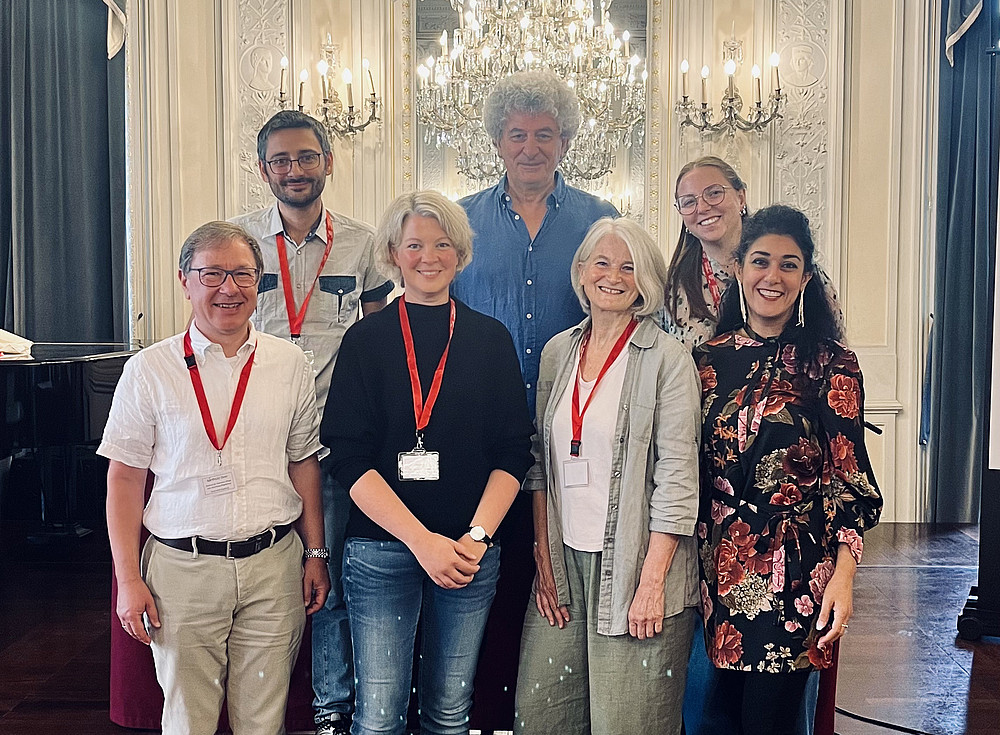
From left: Berthold Over, Carlo Licciulli, Kristina Richts-Matthaei, Giulio D’Angelo, Agnese Pavanello, Elisabetta Forlani, Cristina Scuderi

On 13 and 14 September 2025, members of the TartinianS in Europe project took part in the MerMEId workshop at the Trieste Conservatory. The event provided a valuable opportunity to exchange ideas on digital music cataloguing, explore topics related to Giuseppe Tartini in greater depth and strengthen cooperation between European institutions in the field of digital musicology.

On 13–14 September 2025, members of the Tartinians in Europe project took part in the MerMEId Workshop held at the Conservatory of Trieste, organized in collaboration with the Centro di documentazione e studi tartiniani “Bruno e Michèle Polli” directed by Professor Giulio D’Angelo. The event brought together researchers, editors, and developers from across Europe to discuss recent developments in digital cataloguing and to exchange experiences on the online documentation of musical works.

For the Tartinians in Europe team — composed of researchers from the Universities of Graz, Augsburg, and the Schola Cantorum Basiliensis — the Trieste meeting represented a meaningful opportunity to reconnect and to discuss topics directly related to Giuseppe Tartini and the broader digital ecosystem surrounding his work. The workshop created a productive setting for dialogue and collaboration with institutions such as the Universities of Oxford, Vienna, Bergen, and Mainz, fostering an exchange of practices and perspectives in the field of digital musicology.

The opening session on Saturday morning featured a series of presentations on thematic catalogues of major European composers — including Tartini, Elgar, Delius, Telemann, Schubert, Bruckner, Mahler, and Grieg — highlighting the variety of methodologies used in structuring, maintaining, and updating such databases. These contributions offered a comparative framework through which participants could reflect on the specific challenges of representing complex musical traditions in digital form.

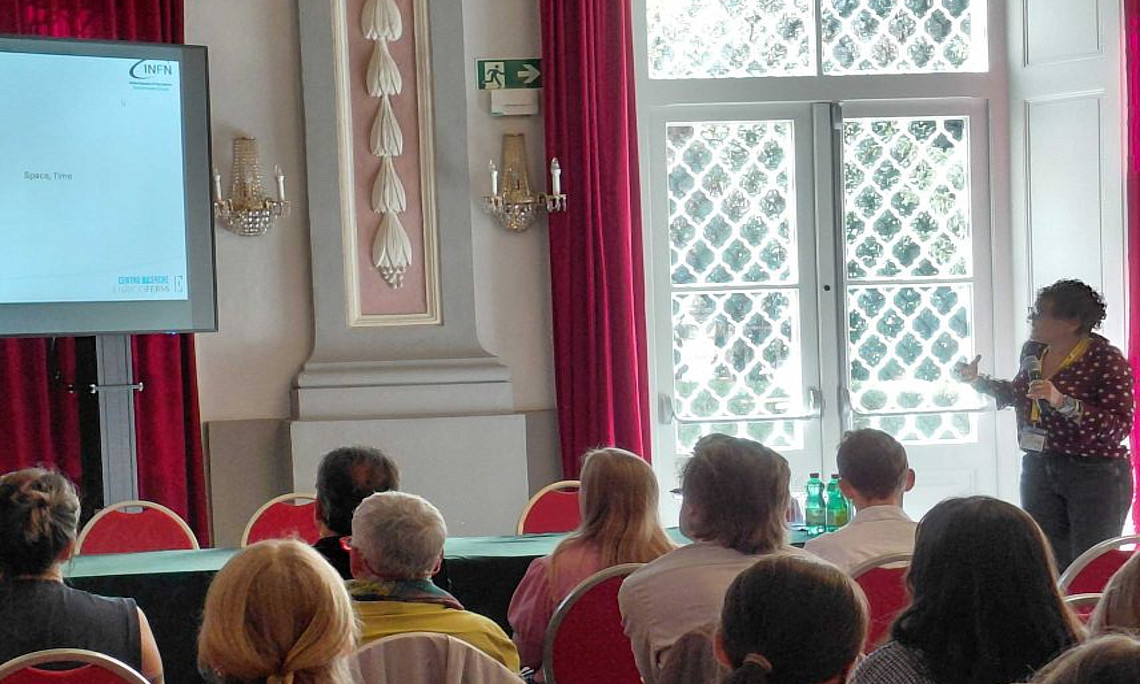
In the afternoon, the focus shifted to the future of MerMEId itself. The team from the Universities of Mainz and Paderborn — Kristina Richts, Carlo Licciulli, and Peter Stadler — introduced the latest developments of the system, demonstrating new functionalities designed to enhance flexibility, interoperability, and XML export. Their presentation combined technical insight with practical demonstration, illustrating how the updated editor can support both established and newly emerging catalogues.

The second day was entirely dedicated to hands-on experimentation, as participants were invited to test the MerMEId editor under the guidance of the Mainz and Paderborn teams. This practical approach allowed for an open exchange of experiences and ideas, encouraging discussion on how to adapt digital cataloguing tools to the evolving needs of musicological research.

Beyond its technical achievements, the Trieste workshop played a significant role in reinforcing the network of collaboration that underpins Tartinians in Europe. Through lively discussions and direct interaction, researchers were able to identify new intersections between projects and to outline future possibilities for cooperation. The meeting thus underscored how shared digital infrastructures can not only preserve but also expand access to the cultural heritage associated with figures like Giuseppe Tartini.

The event concluded with a renewed sense of connection among institutions, united by a common commitment to advancing open, sustainable, and collaborative models for digital music research in Europe.
Related news

Franz Waxman: Between Film Music and the Concert Hall

Ingeborg Zechner’s monograph on Waxman, who “packed numerous careers into his short life” – he was a jazz musician, arranger, film composer, concert organiser and, as a composer and conductor, dabbled in opera. However, it is his film scores that have endured, not only in countless classics that are shown time and again, but also in the form of ‘soundtrack albums’ that remained popular for a long time.

“The myth of OPER! Anything but high culture?”

44 minutes, 4 questions, four times a year: interesting guests and thought-provoking questions on inclusion and diversity in the arts and culture, presented in an interview format.

"Could an adventure be waiting for me?"

100 years of Hans Werner Henze | 50 years of the opera "Don Chisciotte" by Henze/Paisiello | 25 years of the Academy at Palazzo Ricci - three anniversaries, one story

Evelyn Urban on Lee Miller on WDR

On the WDR podcast “Zeitzeichen”, Evelyn Urban discusses the fascinating life and work of Lee Miller—spanning art, war, and emancipation.

Begin of page section:
Additional information:

University of Graz
Universitaetsplatz 3
8010 Graz
Austria
  • Contact
  • Web Editors
  • Moodle
  • UNIGRAZonline
  • Imprint
  • Data Protection Declaration
  • Accessibility Declaration
Weatherstation
Uni Graz

End of this page section. Go to overview of page sections

End of this page section. Go to overview of page sections

Begin of page section:

End of this page section. Go to overview of page sections